Technical guide on activation temperature for electrical fire protection
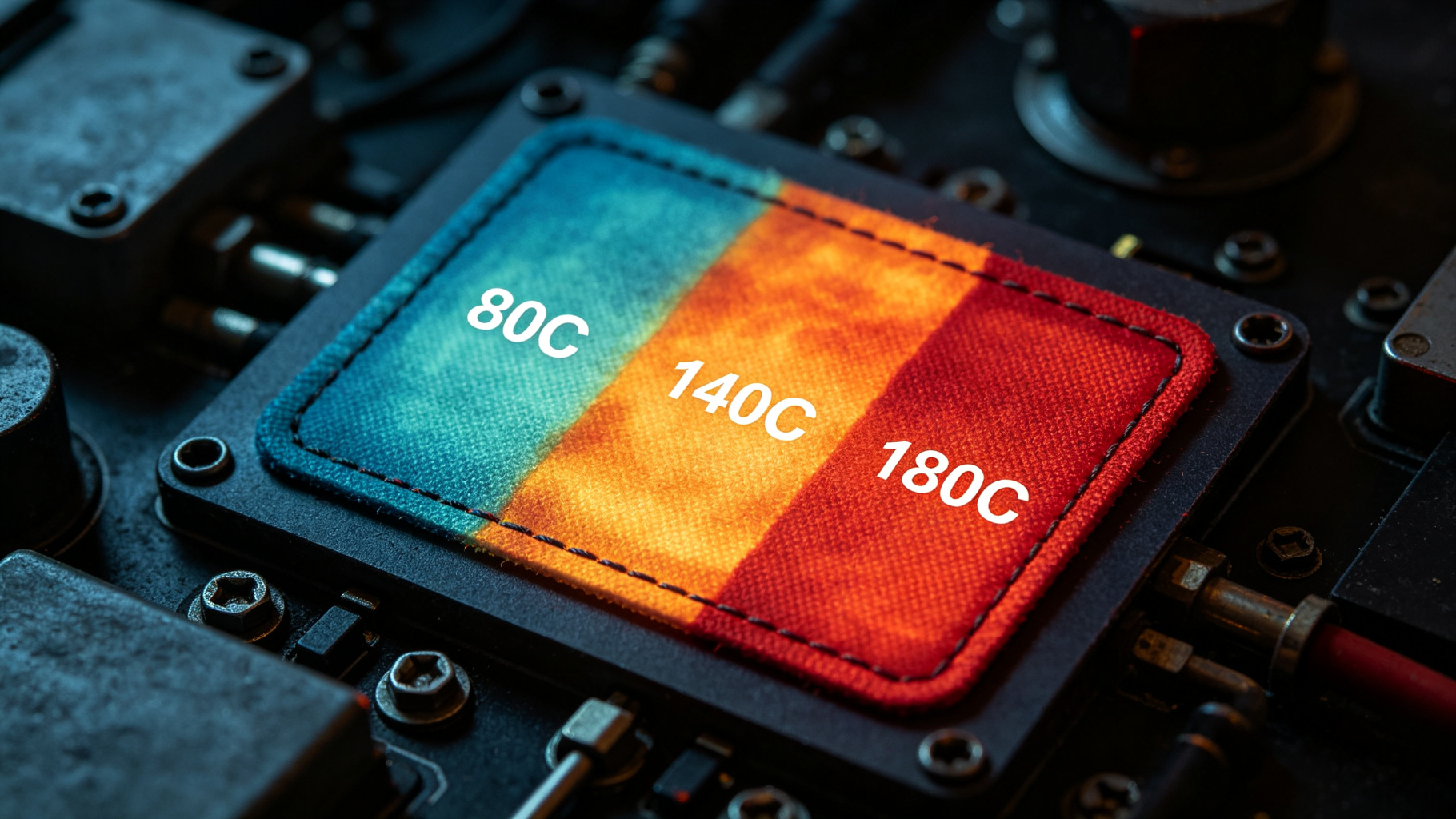
Choosing the wrong activation temperature can mean the difference between a contained incident and total asset loss. Most electrical enclosures demand a balance between nuisance tripping and response speed. In practice, 80°C suits ambient-sensitive environments, 140°C handles moderate heat buildup, and 180°C targets high-load compartments where false alarms are unacceptable.
Selecting the correct activation temperature for a QuellPatch fire suppression patch is one of the most important engineering decisions in a passive electrical fire design. The threshold determines when the patch releases its microencapsulated FK-5-1-12 clean agent: too low, and the patch may respond to normal equipment heat; too high, and suppression may begin after an incipient electrical fault has grown. FIREQUELL offers QuellPatch units with nominal thermal thresholds of 80C, 140C, and 180C, each intended for a different thermal environment and fire-risk profile.
This article explains the engineering basis for fire patch selection among those three ratings. It covers how passive thermal activation works, how to interpret rated thresholds in real enclosures, and how to balance nuisance-activation risk against early suppression. The guidance is oriented toward low- and medium-voltage electrical cabinets, UPS and battery enclosures, motor control centers, process control panels, and similar infrastructure where clean-agent protection is desired without external detection or piping.
QuellPatch uses microencapsulation to contain FK-5-1-12, a clean agent that is electrically nonconductive and leaves no measurable residue on most electrical surfaces. Each patch contains many small engineered shells holding the agent. Under normal storage and operating conditions, the shells remain intact. As the patch temperature rises, shell material loses tensile strength while internal vapor pressure increases. When the material reaches its calibrated thermal threshold, the shells rupture and release the agent.
Because FK-5-1-12 has a boiling point near 49°C, it vaporizes readily once released at 80C, 140C, or 180C. The released vapor disperses through the enclosure and interrupts the combustion process at the flame zone. The system is passive: it requires no control panel, external power, pneumatic detection, or manual intervention to initiate discharge.
The marked activation temperature should not be interpreted as a precision spot-detector alarm value. It is a nominal material threshold established under controlled heating conditions. In service, response depends on heat flux, patch mounting surface, air circulation, enclosure geometry, and how quickly a fault develops. A patch exposed to direct radiant heat from an arc or resistive fault may respond quickly, while a patch mounted on a cool wall may see a slower temperature rise even when a hot spot exists elsewhere.
For this reason, activation temperature selection must consider both the maximum normal temperature at the patch location and the expected fire growth path. The goal is not simply to choose the highest or lowest rating, but to select the threshold that provides adequate margin above normal conditions while still discharging during the incipient stage of a fire.
The 80C QuellPatch is intended for enclosures where normal operating temperatures remain relatively low and stable. Typical applications include climate-controlled UPS rooms, indoor network and server-adjacent cabinets, PLC panels, battery monitoring enclosures, and low-voltage distribution boards in conditioned spaces. In these environments, internal air temperatures commonly remain below 40–50°C, and component surfaces near the patch should not routinely exceed 60–65°C.
The lower thermal threshold allows agent release during early overheating events, such as a loosened bus connection, failing capacitor, or overloaded relay, before significant flame spread. This can be valuable in enclosures containing high-value electronics or processes where even a small electrical fire can cause extended downtime.
The 80C rating requires careful placement. It should not be installed directly on or immediately adjacent to transformers, heat sinks, braking resistors, lighting ballasts, or other components that legitimately operate at elevated surface temperatures. It should also be avoided in enclosures exposed to direct solar gain, poor ventilation, or high process ambient temperatures unless measured data show a sufficient margin.
A practical engineering starting point is to maintain at least 20–30°C between the maximum expected patch temperature under worst-case normal operation and the rated activation temperature. For an 80C patch, that generally means normal patch temperatures should remain below about 50–60°C, depending on enclosure conditions and the reliability of temperature data.
The 140C QuellPatch is often the appropriate starting point for general indoor electrical enclosures. Many low-voltage switchgear, motor control center, and control-panel applications have normal internal air temperatures of 25–45°C, with localized hot surfaces reaching 70–110°C during peak load. A 140C threshold provides margin above those conditions while remaining below temperatures commonly associated with sustained degradation of electrical insulation.
During an incipient electrical fault, resistive heating at a bad connection or tracking fault can rapidly raise local temperatures into the 120–180°C range. Common cable insulations, terminal blocks, and plastic structural parts may soften, distort, or begin off-gassing in this range. A 140C patch can therefore release during the pre-flame or early-flame period, when the fire is still confined to a small component volume.
When 140C patches are used, it is still important to compare the threshold with component temperature ratings and allowable temperature rises. A component that legitimately reaches 120–130°C at full load may leave inadequate margin if the patch is mounted directly to it. In such cases, the patch should be mounted on an adjacent surface, or a higher threshold should be considered. The 140C rating is best suited to locations where abnormal heating is clearly separated from normal thermal cycling.
The 180C QuellPatch is designed for locations where normal enclosure temperatures are too high for 80C or 140C units. Examples include outdoor solar-exposed cabinets, generator-set enclosures, process-area panels near heat-generating equipment, transformer terminal compartments, DC combiner boxes in hot climates, and enclosures with restricted ventilation.
In these settings, solar loading or high ambient air temperature can push internal enclosure surfaces to 90–120°C under normal summer conditions. A 140C patch may have insufficient margin, particularly if filters become dirty or ventilation is partially blocked. The 180C threshold reduces the likelihood of discharge caused by normal operating heat.
The higher threshold involves a timing tradeoff. By the time a patch reaches 180C, an electrical fault may have already produced arcing, melted insulation, or sustained ignition. The 180C patch can still be effective, but placement becomes more important. Units should be located close to likely ignition sources—such as main lugs, breaker terminals, bus joints, and connector blocks—rather than only on the coolest enclosure wall.
Because the fire may be larger at activation, the number and distribution of patches must be calculated for the enclosure volume and fuel load. Relying on a single high-threshold patch in a large cabinet may provide less uniform agent distribution than a properly distributed layout.
Fire patch selection should begin with a site-specific thermal survey. Measure air and surface temperatures at proposed patch locations during worst-case normal operation, including peak load, high ambient temperature, solar exposure, and cooling-fan or filter failure where credible. Data loggers and thermal imaging can identify hot spots that may not be apparent during a brief inspection.
The selection logic can be summarized as follows:
When measured data are limited, use the higher threshold temporarily until representative temperature data are available, then reassess the design.
Activation temperature alone does not ensure performance. Patches should be mounted where they can be reached by rising heat from likely fault locations and where discharged agent can disperse through the enclosure. Large enclosures may require multiple patches distributed at high risk points rather than one centrally located unit. Cable openings, missing knockouts, or large ventilation gaps can reduce retained concentration; enclosure sealing should be reviewed as part of the design.
QuellPatch units have a 5-year service life under specified environmental conditions. They should be visually inspected periodically for physical damage, coating degradation, or displacement, and replaced after the rated service period or after activation. The microencapsulated FK-5-1-12 charge is not field-refillable, and long-term shell integrity cannot be fully verified beyond the published service life.
The choice among 80C, 140C, and 180C QuellPatch units is a thermal-margin decision. The 80C patch offers early activation for cool, controlled environments but requires careful placement to avoid response to normal heat. The 140C patch provides a balanced threshold for many general electrical enclosures, where it can discharge during incipient overheating while remaining above typical operating temperatures. The 180C patch is intended for high-ambient or solar-loaded locations, where its higher threshold reduces nuisance discharge risk at the cost of later activation.
Effective fire patch selection depends on measured temperatures, enclosure geometry, likely ignition sources, and proper agent distribution. By selecting the lowest activation temperature that maintains a safe margin above worst-case normal conditions, engineers can support timely passive suppression while reducing the risk of unintended discharge.
A: Start by measuring the maximum normal air and surface temperatures at the proposed patch location under worst-case operating conditions. Select the lowest threshold that maintains at least 20–30 °C of margin above normal temperatures: 80 °C for cool controlled spaces, 140 °C for general enclosures, and 180 °C for high-ambient or high heat-flux locations.
A: It can if the patch is mounted too close to a hot component or if the selected activation threshold is too low. Keep patches away from surfaces that routinely operate near the rated activation temperature and use field temperature measurements under full load before selecting 80 °C, 140 °C, or 180 °C units.
A: Yes, mixing thresholds can be appropriate when different zones within one enclosure have different normal temperatures. Use lower-threshold patches in cooler cable or electronics areas and higher-threshold patches near transformers, heaters, drives, or heat sinks, provided each location maintains the recommended 20–30 °C safety margin.
A: The 80 °C patch is typically selected for IT cabinets and controlled electronics spaces because it provides earlier response while normal inlet and enclosure temperatures remain well below threshold. If high-density switches, UPS units, or nearby power equipment create elevated surface temperatures, verify measurements before choosing 80 °C units.
A: Use 180 °C patches where high ambient temperatures or nearby hot components make 140 °C units vulnerable to nuisance activation, such as near transformers, power resistors, drives, or industrial heat sources. The 140 °C variant remains the balanced default for general electrical enclosures when measured temperatures allow adequate margin.
FIREQUELL QuellPatch delivers automatic, maintenance-free clean-agent protection for electrical panels, battery cabinets and control rooms — designed to meet FM Approved, UL Listed, CE and UKCA requirements.
Request a Site Assessment