
Electrical Panel Fire Risks: Statistics, Causes, and Prevention
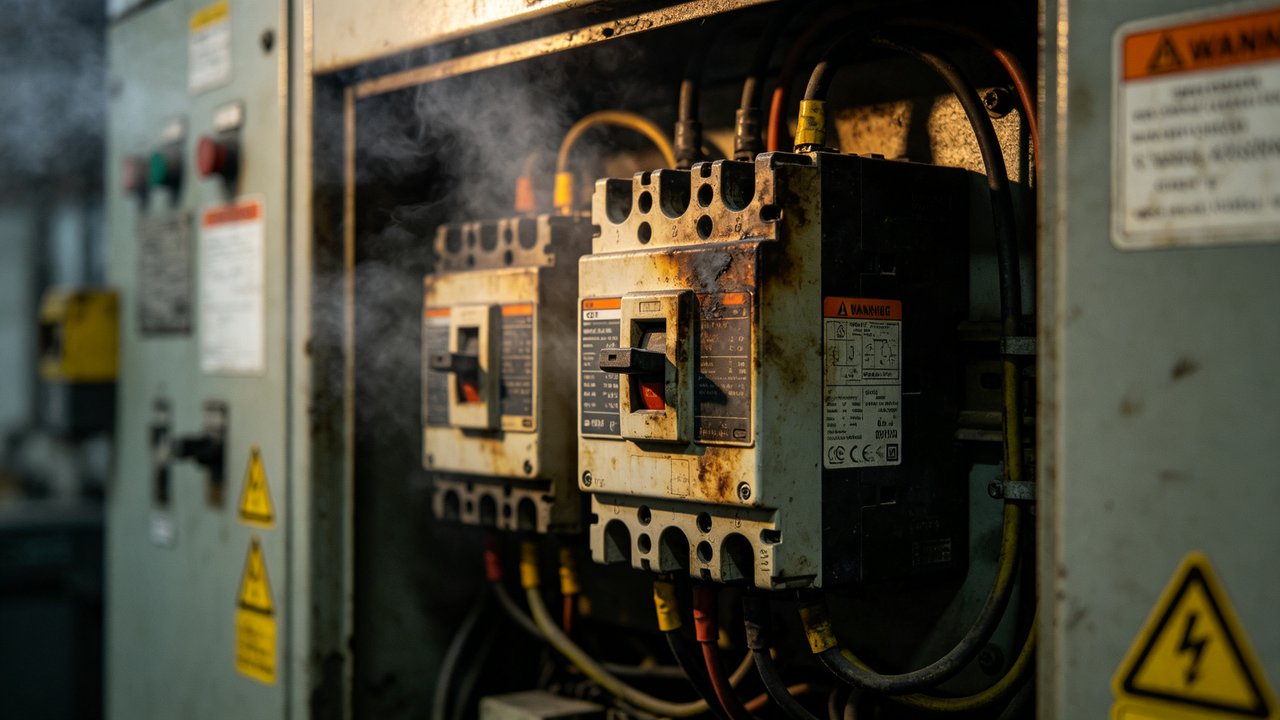
Understanding the Scale of Electrical Panel Fire Risks
Electrical panels are the nerve center of every commercial and industrial facility, yet they remain one of the most underappreciated fire hazards on site. According to the National Fire Protection Association (NFPA), electrical distribution and lighting equipment is consistently among the top five causes of structural fires in the United States, accounting for roughly 34,000 fires, 430 civilian deaths, 1,370 injuries, and more than $1.3 billion in direct property damage annually. Panels are involved in a disproportionate share of these incidents because they concentrate high-amperage connections, aging components, and heat-generating components inside a single enclosure.
For facility managers, electrical engineers, and safety officers, the numbers translate into a clear operational mandate: identify ignition sources early, mitigate them systematically, and add layered protection where human oversight inevitably falls short. Below is a breakdown of the most common ignition mechanisms, what NFPA data tells us about where they occur, and the prevention framework that leading B2B organizations are deploying.
Common Causes of Electrical Panel Fires
Although every facility has unique load profiles, four root causes account for the majority of panel-related fire events. Understanding each one is the first step toward defensible risk reduction.
- Loose or Degraded Connections: The single most frequent ignition source is the loose connection. Vibration, thermal cycling, and improper torque during installation create high-resistance junctions. As resistance rises, I²R heating escalates, eventually charring insulation and igniting adjacent combustibles. NFPA 70B now classifies loose connections as a documented leading cause of electrical failure across all industries.
- Circuit Overload and Load Imbalance: When downstream demand exceeds panel rating, or when phases become imbalanced, breakers and bus bars run above their thermal limits. Repeated nuisance tripping is often the warning sign that operators miss until a catastrophic failure occurs.
- Dust, Debris, and Contaminant Accumulation: Industrial environments — especially in manufacturing, woodworking, food processing, and metalworking — generate airborne particulates that infiltrate panel enclosures. Dust acts as an insulator and as a combustible fuel source. A single arc event at 4,000°C will ignite settled lint, flour, or metallic dust in milliseconds.
- Aging Infrastructure and Obsolete Components: The average commercial electrical system is now over 30 years old. Insulation becomes brittle, breakers fail to trip, and bus bars corrode. Many facilities continue operating equipment that has exceeded its designed service life, dramatically increasing ignition probability.
What NFPA Statistics Reveal About Electrical Fire Trends
NFPA's periodic reports highlight several patterns that should shape any institutional mitigation plan. First, electrical fires disproportionately occur in non-residential structures — roughly 70% of total losses — because commercial loads are denser and more complex. Second, the failure rate accelerates after year 15 of equipment life, with a sharp inflection point around year 25. Third, fires originating inside the panel enclosure itself (rather than downstream wiring) account for the highest average property damage because detection is delayed until the event breaches the cabinet.
Most importantly, NFPA research shows that facilities with formal Electrical Maintenance Programs (EMPs) consistent with NFPA 70B guidance experience significantly fewer fire incidents than those relying on run-to-failure maintenance. The data is unambiguous: preventive action reduces loss frequency and severity.
Prevention Strategies That Actually Work
A defensible prevention program layers three categories of control: administrative, mechanical, and engineered. The most resilient programs integrate all three.
- Scheduled Thermographic Inspection: Annual or semi-annual infrared scans identify loose connections and overloaded breakers before they reach ignition temperature. This is the single highest-ROI diagnostic available and is mandated under NFPA 70B for many facility categories.
- Torque Verification and Re-Tightening Programs: Every connection should be torqued to manufacturer specification during commissioning and re-verified on a defined cycle. Thermal cycling causes even properly torqued connections to drift.
- Enclosure Cleaning and Sealing: Remove dust accumulation and seal conduit entries to prevent re-entry. For harsh environments, specify NEMA 4 or 4X enclosures with positive pressure options.
- Load Studies and Breaker Audits: Document actual demand versus nameplate capacity. Replace breakers that fail trip testing. Address load imbalance proactively.
- Component Replacement at End of Service Life: Plan capital replacement of panels approaching 30 years rather than waiting for failure.
Why Passive Fire Suppression Is the Missing Layer
Even the most disciplined maintenance program cannot eliminate every ignition event. Human error, supplier defects, and unforeseen load events will always create residual risk. This is where passive fire suppression — specifically, automatic fire suppression integrated directly into the panel enclosure — becomes a strategic differentiator. Unlike sprinkler systems designed for room-scale events, panel-level suppression detects and contains an arc or flame event at the source, before it propagates to the building structure.
Modern clean-agent and aerosol-based suppression modules activate within seconds of detecting abnormal heat or arc signatures, extinguishing the event while the enclosure remains largely intact. The result is minimal downtime, no water damage, and no cascading facility-wide shutdown. For mission-critical operations — data centers, healthcare, manufacturing, and utilities — this translates directly into business continuity.
Adding the Final Layer of Protection with FIREQUELL
For facility and safety professionals evaluating engineered suppression solutions, FIREQUELL delivers a purpose-built approach to electrical enclosure fire mitigation. FIREQUELL systems are designed for direct integration into new and existing panels, providing automatic detection and suppression without external power or operator intervention. The technology aligns with NFPA 70B recommendations, supports compliance documentation, and reduces the catastrophic-loss scenarios that even well-maintained panels cannot fully eliminate.
When paired with scheduled thermography, torque programs, and load audits, FIREQUELL closes the gap between best-practice prevention and worst-case reality — the gap where the most expensive losses occur.