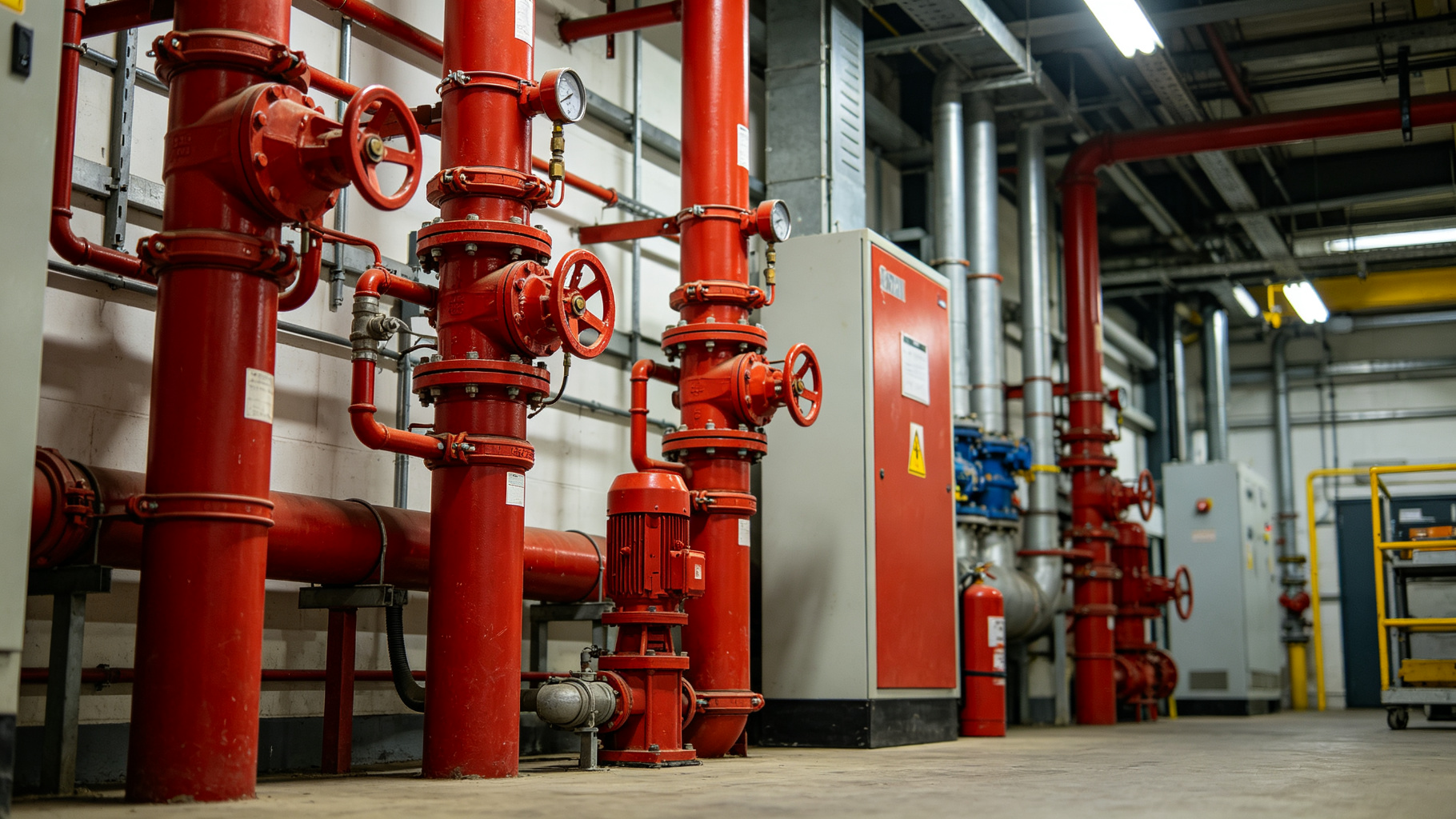
Technical guide on lifecycle cost for electrical fire protection
When you're budgeting for electrical fire protection, the upfront price tag is just the beginning. Lifecycle costs—covering installation, maintenance, testing, and eventual replacement—can dwarf that initial investment. For a typical data center, these ongoing expenses might account for 60% of total ownership. Here's how to calculate the real numbers.
When selecting fire suppression for electrical infrastructure, including switchgear, UPS cabinets, and power distribution units, facility teams often prioritize upfront fire system cost over long-term lifecycle cost. This approach can lead to unbudgeted expenditures over the service life of the asset, as active clean-agent systems carry recurring costs for inspection, maintenance, monitoring, and periodic requalification that are frequently omitted from initial procurement estimates. Passive suppression systems such as FIREQUELL QuellPatch, which use microencapsulated FK-5-1-12 clean agent and passive thermal activation, have a fundamentally different cost structure that is not yet widely documented in TCO analysis frameworks. This analysis compares passive and active clean-agent system costs across every phase of the service lifecycle, from initial capital expenditure through decommissioning, with a focus on enclosed electrical compartment use cases. Cost data is drawn from 2024 North American industry pricing, NFPA service standards, and listed product performance specifications.
Active total-flood FK-5-1-12 systems for a 10 m³ electrical compartment require a pressurized agent cylinder, solenoid activation assembly, detection tubing, control panel, alarm devices, piping, and nozzles. Aggregate hardware costs range from $4,200 to $5,800, depending on integration with building management systems. Each QuellPatch unit contains a polymer matrix of microencapsulated FK-5-1-12 droplets, designed to rupture only when exposed to sustained temperatures at or above its rated activation threshold. Three ratings are available for electrical infrastructure: 80°C for low-voltage control compartments, 140°C for medium-voltage switchgear bus sections, and 180°C for high-current breaker cubicles with higher transient operating temperatures. A 10 m³ compartment requires 12 to 16 patches at recommended density, for total hardware costs of $1,020 to $1,760.
Active system installation requires certified technicians to pressure-test piping, wire controls, calibrate sensors, test agent concentration, and integrate alarms. Installation takes 8 to 12 labor hours per compartment, plus specialized permits in most jurisdictions, for total installed costs of $1,000 to $1,500. QuellPatch uses a peel-and-stick mounting design for direct application to interior enclosure surfaces, with no piping, wiring, or pressurized components. Installation takes 1 to 2 labor hours, can be completed by in-house electrical staff following manufacturer guidelines, and rarely requires specialized permits, for total installed costs of $125 to $250. Across hardware and installation, active systems carry 3.2 to 4.7 times higher upfront cost for equivalent 10 m³ coverage.
NFPA 2001 requires monthly visual cylinder inspections, annual functional testing of detection and controls, and annual leak testing for active clean-agent systems. For a single compartment, these inspections require a certified technician, with annual costs of $350 to $520 including travel and labor. Most commercial facilities also require 24/7 central station monitoring for active systems, adding $20 to $40 per month per protected zone. QuellPatch’s passive thermal activation design has no moving parts, electronic controls, or pressurized vessels, so it is not subject to NFPA 2001 functional testing rules. Most authorities having jurisdiction (AHJs) require only an annual visual inspection to verify patches are secure and undamaged, a 10 to 15 minute task completable during routine walkthroughs, for annual incremental labor costs of $15 to $30. No central station monitoring is required for passive operation.
Active FK-5-1-12 systems require hydrostatic cylinder testing every 5 years, plus valve replacement and agent recharge if leakage exceeds 5% (typical field leakage is 1% to 2% annually). These 5-year overhauls cost $1,200 to $1,800 per compartment, including labor and replacement agent. QuellPatch has a rated 5-year service life, at which point all units are replaced in a single scheduled visit. No intermediate consumables, pressure testing, or calibration are required between replacement cycles. For multi-cubicle switchgear lineups, active systems carry fixed control and monitoring overhead that does not scale per compartment, while QuellPatch costs scale linearly with the number of protected enclosures.
When an active total-flood system discharges, it releases its entire FK-5-1-12 charge into the protected space. While the agent is non-conductive and residue-free, post-activation recovery requires a full recharge, cylinder reset, detection inspection, and functional testing, costing $1,800 to $2,600 per event. QuellPatch activates locally: only heat-exposed patches reaching their rated threshold rupture, releasing agent directly at the fire origin. An incipient electrical fire typically ruptures 2 to 4 adjacent patches, so recovery only requires replacement of discharged units, for a total cost of $170 to $440. No system-wide recalibration is required, and suppression can be restored in under 30 minutes in most cases.
Industry data suggests 3% to 7% of active clean-agent systems experience a false discharge over a 10-year service period, often triggered by detection circuit faults, pressure surges, or maintenance errors. False discharges can force unplanned shutdowns of connected electrical loads, with 2023 Uptime Institute data estimating $5,000 to $12,000 per hour in downtime costs for critical power environments. Passive thermal activation carries lower unintended discharge risk, as units require sustained direct heat at their rated threshold to rupture. Third-party listing testing found no false activation events across 10,000 hours of exposure to normal operating temperatures and transient electrical surges, though field performance may vary based on installation conditions.
FK-5-1-12 is a fluorinated clean agent subject to venting restrictions in many jurisdictions, so active system decommissioning requires certified recovery of remaining bulk agent, hazardous waste documentation, and proper disposal of pressurized cylinders. For a single-compartment system, these costs range from $900 to $1,400, including labor and disposal fees. Unruptured QuellPatch units contain small, individually contained microencapsulated agent volumes. FIREQUELL operates a take-back program for used patches in most regions, with disposal costs included in replacement product pricing; for sites without take-back access, disposal averages $0.50 to $1.00 per patch through standard hazardous waste vendors.
Active system decommissioning requires removal of piping, disconnection of wiring, and patching of enclosure penetrations, requiring 4 to 6 labor hours and potentially scheduled downtime for connected loads. QuellPatch removal requires no specialized tools, takes 15 to 30 minutes per compartment, and leaves no permanent penetrations or mounting damage. Over a 20-year electrical infrastructure service life, active systems typically require one full hardware replacement, while QuellPatch requires four 5-year replacement cycles, each with far lower labor and disruption costs.
A 20-year TCO model was developed for a 10 m³ medium-voltage switchgear compartment, using 2024 North American industry pricing, NFPA service standards, and listed product performance data. The model assumes equivalent incipient Class C fire suppression performance, consistent compartment geometry, and no regulatory changes over the analysis period. QuellPatch units specified use 140°C activation, deployed at manufacturer-recommended density, while the active comparator is a standard total-flood FK-5-1-12 system sized to NFPA 2001 concentration requirements.
Using midpoint values for all cost ranges, the active system returned a 20-year TCO of $31,380, compared to $6,447 for the QuellPatch deployment. The largest active system cost drivers were scheduled maintenance and overhauls (42%), central station monitoring (23%), and expected false discharge downtime (11%). For QuellPatch, 92% of TCO came from upfront hardware and scheduled 5-year replacements, with negligible unplanned cost exposure. Results are sensitive to local labor rates, regulation, and facility downtime costs; the TCO gap may widen for high-availability sites. Active systems may remain cost-effective for open electrical rooms larger than 50 m³, where fixed overhead is spread across a greater protected volume.
This lifecycle cost analysis demonstrates that passive QuellPatch systems carry substantially lower fire system cost across every phase of the service lifecycle relative to active FK-5-1-12 total-flood systems for enclosed electrical compartments. Upfront capital costs are 70% to 80% lower, recurring maintenance and monitoring costs are reduced by 90% or more, and unplanned costs from false discharges and post-activation recovery are minimal for passive deployments. When conducting TCO analysis for passive vs active cost comparisons, facility teams should account for all cost categories, including downtime risk and decommissioning expenses, rather than relying solely on upfront procurement pricing. System selection should always be aligned with compartment size, fire load, and local code requirements, with input from a licensed fire protection engineer.
A: QuellPatch units have a rated 5-year service life from installation when deployed within the manufacturer’s specified temperature and humidity ranges. Replacement involves removing the old patch and installing a new unit; there is no pressure cylinder to hydrotest or recharge during that service interval.
A: No. Passive patches such as QuellPatch are not subject to the monthly pressure checks and annual functional discharge testing required for pressurized active clean-agent systems under NFPA 2001. Most AHJs require only an annual visual verification of placement, setpoint, physical condition, and absence of obstruction.
A: Over 20 years, active clean-agent systems typically accumulate costs for cylinder pressure maintenance, inspection, recharge labor, enclosure integrity testing, and possible hydrostatic testing. A passive QuellPatch installation generally has lower recurring maintenance cost, with planned replacement every 5 years and no pressurized cylinder servicing.
A: Downtime varies by facility, but a single electrical or control-cabinet fire can halt production, require equipment replacement, and trigger investigations lasting hours to days. The largest TCO exposure is often not agent cost but business interruption, emergency labor, component replacement, and delayed restart.
A: Active pressurized FK-5-1-12 systems may require controlled recovery, contractor labor, pressure-cylinder disposal, and documentation at end of service. QuellPatch is removed as a self-contained passive device, reducing decommissioning labor and avoiding cylinder handling or refrigerant-recovery procedures.
FIREQUELL QuellPatch delivers automatic, maintenance-free clean-agent protection for electrical panels, battery cabinets and control rooms — designed to meet FM Approved, UL Listed, CE and UKCA requirements.
Request a Site Assessment