
Lithium-Ion Battery Fire Protection: A Complete Guide
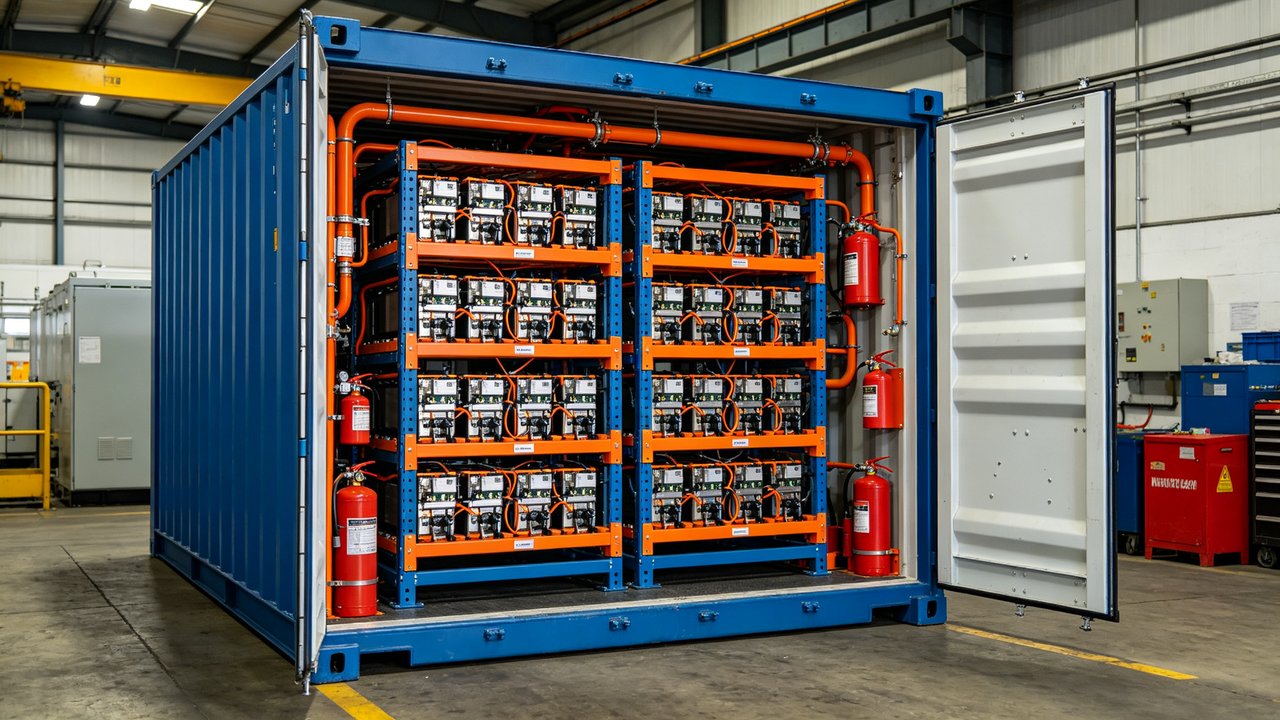
Why Lithium-Ion Battery Fire Protection Is a Critical Safety Priority
Lithium-ion batteries power everything from electric vehicles to grid-scale energy storage systems, but their energy density comes with a serious fire risk. Unlike conventional fires, lithium-ion battery fires are self-sustaining, chemically driven, and notoriously difficult to extinguish with water or traditional agents. For facility managers, fire protection engineers, and BESS integrators, understanding the unique hazards of lithium-ion technology is the first step toward designing a compliant, resilient safety strategy.
Understanding Thermal Runaway: The Core Hazard
Thermal runaway is the chain reaction at the heart of every lithium-ion battery fire. It begins when a cell is subjected to mechanical damage, overcharging, internal short circuits, or extreme heat. Once the internal temperature exceeds a critical threshold (typically 90–120°C depending on chemistry), the separator fails, the cathode releases oxygen, and the electrolyte ignites. This exothermic reaction generates heat that propagates to adjacent cells, triggering a cascading failure that can engulf an entire battery pack in minutes.
- Off-gassing: Early-stage thermal runaway releases flammable electrolytes (such as vent gases including hydrogen, methane, and carbon monoxide) before flames appear, often without warning.
- Re-ignition risk: Cells can reignite hours or even days after the initial event as residual heat reignites unburned electrolyte.
- Toxic smoke: Combustion byproducts include hydrogen fluoride and other highly corrosive gases that pose serious health hazards to personnel.
BESS Fire Safety: Code Compliance and System Design
Battery Energy Storage Systems (BESS) are governed by a growing body of standards, including NFPA 855, UL 9540, UL 9540A, and IEC 62933. These frameworks require tested, layered protection strategies that go beyond simple detection and alarm. A compliant BESS fire safety design typically incorporates:
- Gas detection and early warning ventilation systems
- Thermal runaway sensors (off-gas and temperature monitoring)
- Cell-level, module-level, and system-level suppression
- Deflagration venting and gas exhaust management
- Fire-rated enclosures and 1–3 hour separation barriers
Because a single failed cell can compromise an entire installation, suppression must act at the earliest possible stage, ideally before cell-to-cell propagation occurs.
Cell-Level Suppression: The Most Effective Intervention Point
Once a cell vents and ignites, suppressing the entire rack is a losing battle. The most effective approach is to intervene at the cell level, where the failure originates. Modern cell-level suppression systems integrate chemical agents directly into the battery module, releasing them automatically when abnormal temperatures are detected. This suppresses the fire at its source, cools adjacent cells, and prevents propagation across the pack.
Key performance requirements for cell-level agents include:
- Rapid activation (typically within seconds of detection)
- High dielectric strength to prevent short-circuit damage
- Effective cooling capacity to absorb heat and prevent re-ignition
- Non-conductive, residue-free discharge that does not harm electronics
- Long-term reliability in sealed or semi-sealed enclosures
FK-5-1-12: The Industry-Leading Clean Agent for Li-Ion Applications
FK-5-1-12 (chemical name dodecafluoro-2-methylpentan-3-one, commonly known as Novec 1230) has emerged as a preferred clean agent for lithium-ion battery fire protection. Its suitability for BESS and EV applications stems from several technical advantages:
- Clean discharge: Leaves no residue, eliminating post-event equipment damage and downtime.
- High dielectric strength: Safe to discharge directly onto energized battery modules.
- Zero ozone depletion potential and low GWP: Aligns with environmental regulations and ESG mandates.
- Effective cooling: Its vapor phase provides rapid heat absorption, addressing the self-sustaining nature of lithium-ion fires.
- Compact footprint: High extinguishing concentration allows smaller cylinder banks, ideal for space-constrained containerized BESS installations.
FK-5-1-12 is particularly effective when applied at the cell-level or module-level, where it can interrupt propagation before a full thermal runaway event is established.
FIREQUELL QuellArmor: Engineered Suppression for Energy Storage
FIREQUELL QuellArmor is a purpose-built suppression solution designed specifically for the demands of lithium-ion battery and energy storage applications. Built around FK-5-1-12 clean agent technology, QuellArmor integrates directly into battery modules, providing automatic, localized, and highly effective cell-level protection.
Key benefits for BESS operators and integrators include:
- Automatic detection and activation: Thermal sensors trigger agent release within seconds of a cell anomaly.
- Propagation prevention: Cools adjacent cells and suppresses flame spread at the source, rather than reacting to a fully developed fire.
- Code alignment: Supports compliance with NFPA 855, UL 9540A test protocols, and international equivalents.
- Minimal footprint: Modular design fits within standard rack architectures without reducing energy density.
- Reduced total cost of ownership: Clean discharge eliminates cleanup costs, and the system is designed for minimal maintenance over a multi-year service life.
For containerized BESS, behind-the-meter installations, and utility-scale projects, QuellArmor provides a critical layer of defense that complements gas detection, ventilation, and fire-rated enclosure strategies.
Building a Layered Lithium-Ion Fire Protection Strategy
No single technology can fully mitigate lithium-ion fire risk. A robust protection strategy combines prevention, detection, suppression, and post-event management. FK-5-1-12-based systems such as FIREQUELL QuellArmor represent the most advanced cell-level suppression technology available today, giving operators a critical advantage in the moments that matter most. By investing in proven, standards-aligned suppression at the cell level, BESS stakeholders can protect assets, maintain uptime, and meet the industry's evolving safety expectations.