
Why Zero-Maintenance Fire Protection Matters for Distributed Assets
The Hidden Cost of "Active" Fire Protection
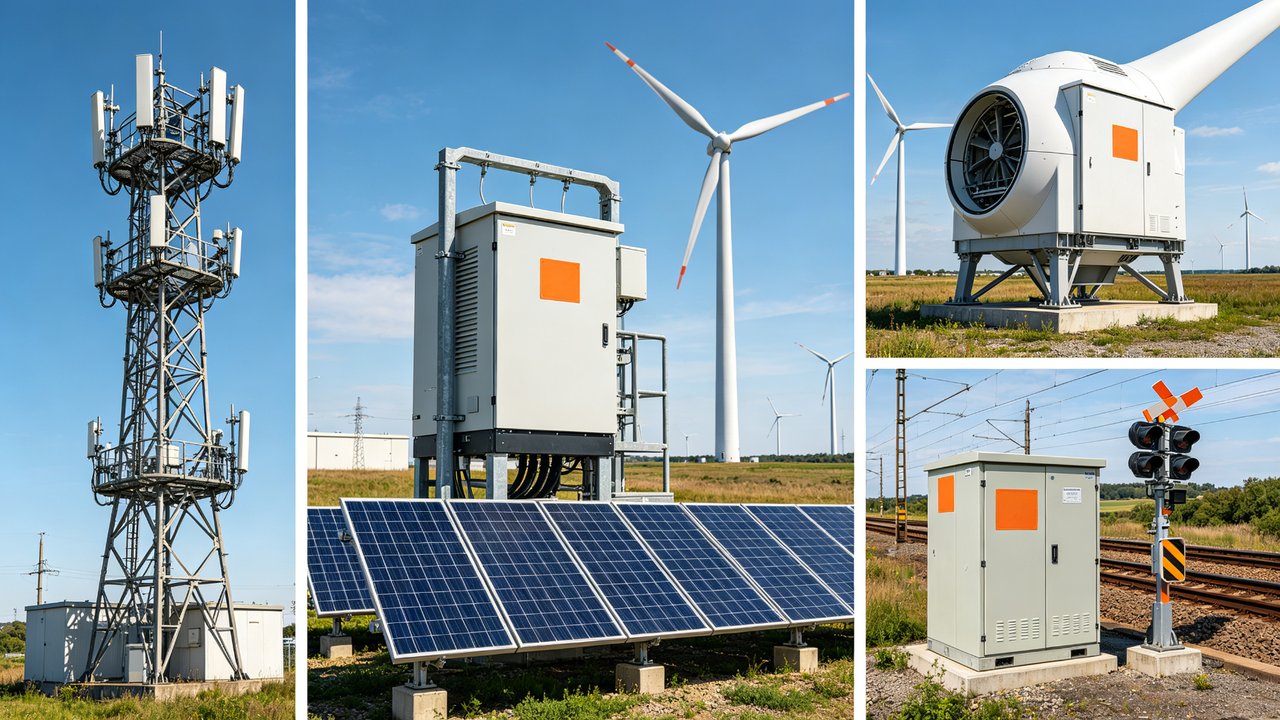
For operators of distributed infrastructure—telecom cabinets, wind turbines, remote pump stations, EV charging hubs—fire suppression is often treated as a checkbox compliance item. Yet the systems traditionally used to check that box carry a cost burden that extends far beyond the initial purchase price. Active fire suppression technologies such as aerosol generators, pressurized gas cylinders, and electronic detection panels require ongoing inspection, re-certification, mechanical testing, and consumable replacement. Across a network of dozens or hundreds of remote sites, those line items compound into a significant operational expense.
Industry estimates place recurring maintenance on conventional suppression systems at 15–25% of the original install cost annually. For a fleet operator managing 500 remote cabinets, that figure quickly outpaces the capital deployed in the systems themselves. When you layer in truck rolls, certified technician time, and the documentation overhead demanded by insurance carriers and AHJs, the total cost of ownership looks very different from the procurement quote.
Why Distributed Assets Amplify the Problem
Unlike a single data center or industrial plant, distributed assets present a fundamentally different maintenance challenge. Each site is geographically isolated, often unmanned, and frequently located in jurisdictions with varying inspection regimes. The practical realities include:
- Travel cost penalty: A certified fire suppression technician visiting a remote turbine pad or roadside cabinet may bill 4–8 hours of round-trip time for 30 minutes of actual inspection work.
- Access friction: Sites may require coordination with property owners, utility lockout procedures, or specialized climbing/fall protection before any service can be performed.
- Inventory complexity: Managing replacement cylinders, detection heads, and control board spares across hundreds of part numbers creates its own warehouse and chain-of-custody burden.
- Documentation gaps: When inspections are deferred or missed, audit findings can trigger remediation orders that dwarf the original maintenance budget.
- Failure blindness: Without on-site personnel, a degraded suppression system may not be discovered until a fire event exposes the gap.
For asset classes such as battery energy storage, DC telecom power plants, and remote pumping infrastructure, these dynamics make traditional active suppression systems economically and logistically difficult to sustain over a multi-year lifecycle.
The Zero-Maintenance Alternative
Passive, self-contained fire suppression devices eliminate the recurring service equation entirely. Products such as FIREQUELL are engineered as sealed units that require no power supply, no detection wiring, no annual inspection, and no replacement of consumables. The technology relies on a thermally activated release mechanism: when ambient temperature at the protected asset reaches the activation threshold, the integrated agent is discharged directly into the enclosure or compartment where the fire would otherwise propagate.
Because the unit is entirely mechanical and self-contained, there are no circuits to test, no pressure gauges to verify, and no agent can leak or degrade through pressurization cycles. Once installed, the device remains on standby for its full service life with zero scheduled service.
The 5-Year Service Life Advantage
FIREQUELL units are rated for a 5-year operational service life, verified through accelerated aging and environmental exposure testing. Over that window, the lifecycle math is straightforward:
- Active system, 5 years: Initial install cost plus 5 annual inspection/service visits, plus consumable replacement, plus technician dispatch, plus documentation labor. Conservative estimate: 2–4x the install cost over the period.
- FIREQUELL, 5 years: Initial install cost. End of period: replace the unit. No service visits in between.
When scaled across a distributed fleet, the differential is material. A network of 300 remote sites converted from active to zero-maintenance suppression typically realizes six-figure annual savings in service contracts alone, with additional soft savings in administrative overhead and reduced insurance compliance friction.
Visual Verification Without Site Visits
One of the operational difficulties with remote fire protection is confidence that the suppression device is still in standby condition. FIREQUELL addresses this through an integrated visual thermal indicator—a temperature-sensitive element that visibly changes state when the device has been exposed to elevated temperatures approaching its activation threshold. Maintenance crews performing routine visual inspections of a remote site can immediately confirm device status at a glance, without opening the unit, applying test equipment, or consulting a control panel.
This feature converts fire suppression from an invisible maintenance liability into a transparent, verifiable component of the asset's safety package. For fleet operators subject to NFPA, IFC, or insurer-driven inspection requirements, that visibility carries direct compliance value.
Where Zero-Maintenance Fits Best
Zero-maintenance suppression is not a universal replacement for every fire protection scenario. It is purpose-built for enclosed or semi-enclosed asset classes where fire risk is localized and the cost of maintaining active systems is structurally prohibitive. Strong application fits include:
- Telecommunications remote cabinets and outdoor enclosures
- Battery storage modules and lithium-ion equipment housings
- Wind turbine nacelles and control compartments
- EV charging station internal components
- Remote pumping and SCADA infrastructure
- Industrial control panels and MCC cabinets
The Strategic Case
For B2B operators managing distributed infrastructure at scale, fire protection decisions should be evaluated on total lifecycle cost, deployment logistics, and audit defensibility—not solely on upfront unit price. Zero-maintenance technologies such as FIREQUELL reframe the procurement conversation by eliminating the largest hidden cost drivers of conventional systems. The 5-year service window, combined with at-a-glance visual verification, gives operations, safety, and finance stakeholders something rare: a fire protection line item that behaves predictably over time.
When the next budget cycle arrives, the question is no longer how much fire suppression will cost to maintain. It is how much you save by choosing a system that doesn't require any.