Technical guide on zero maintenance for electrical fire protection
For facility managers and electrical engineers, the real cost of fire protection isn’t the hardware—it’s the ongoing inspections, refills, and false alarms that drain budgets year after year. That’s why zero-maintenance systems are gaining traction in switchgear and control panels, where downtime for servicing can be as disruptive as the fire itself. But does eliminating upkeep genuinely lower total cost of ownership, or are hidden trade-offs lurking in the fine print? The value proposition extends beyond simple savings, touching on reliability, compliance, and operational continuity.
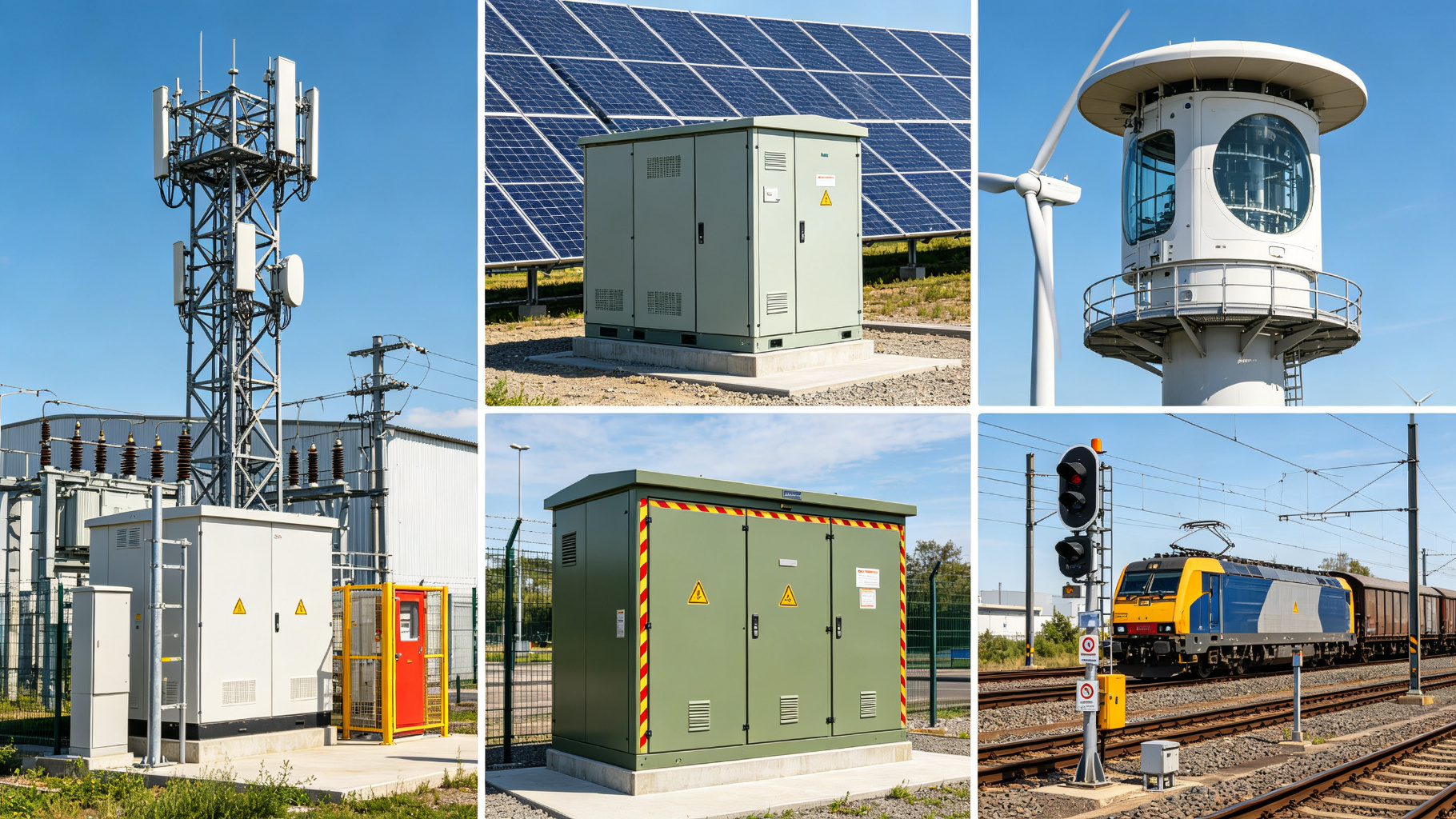
Distributed assets—telecom cabinets, edge computing nodes, solar combiner boxes, EV charging pedestals, railway signaling housings, and pipeline SCADA enclosures—present a difficult fire-protection problem. The equipment is often unmanned, geographically dispersed, and exposed to dust, moisture, vibration, and wide temperature swings. Conventional suppression systems that rely on pressure vessels, detectors, control panels, and scheduled servicing can become a liability when each maintenance visit requires hours of travel, site access coordination, and specialized labor.
Zero-maintenance fire protection changes this equation by removing the need for periodic inspection, refilling, pressure testing, or battery replacement during the rated service life. For operators of distributed assets, this is not merely a product feature; it is an operating model that reduces recurring cost, limits maintenance-induced failures, and shortens the time equipment spends in an unknown protection state. The QuellPatch product line applies this model using microencapsulated FK-5-1-12 clean agent and passive thermal activation, providing maintenance-free fire protection at the point where electrical faults commonly begin.
At a central facility, fire systems can be inspected during normal rounds. At remote sites, the economics are reversed. A technician may spend several hours driving to a roadside cabinet or tower shelter for a few minutes of gauge reading and detector cleaning. The cost of access often exceeds the amortized cost of the suppression hardware, especially when sites are visited two or more times per year.
For a fleet of 1,000 distributed sites, an illustrative maintenance model shows the scale quickly. If one semiannual visit requires three hours of travel, one hour on site, 60 miles of round-trip travel, labor at $120 per hour, and vehicle cost at $0.65 per mile, the visit costs approximately $519. Across two visits per year, suppression-related maintenance exceeds $1,000 per site, or roughly $1.04 million annually for the fleet. These figures are illustrative rather than universal, but they reflect a common pattern: for distributed assets, maintenance labor and logistics often dominate the total cost of ownership.
Conventional systems also create failure modes that are directly tied to servicing. Opening an enclosure in a humid or dusty environment can contaminate electronics. A control panel may be left in a bypass state after a test. A detector may be incorrectly reinstalled, a gauge may be misread, or a solenoid may stick after long idle periods. Between scheduled visits, a slow pressure leak or drained backup battery may leave the system impaired without notification.
Zero-maintenance designs reduce these exposures by eliminating the components that require routine attention. For remote equipment protection, this can be more valuable than adding another sensor, because the protection remains available without depending on a technician’s visit schedule.
QuellPatch stores FK-5-1-12 clean agent in microencapsulated cells within a flexible patch. Rather than holding the agent in a pressurized cylinder, the polymer shell of each cell acts as the primary containment boundary. FK-5-1-12 is suitable for electrical infrastructure because it is electrically non-conductive, evaporates readily, and leaves no powdery or sticky residue on circuit boards, connectors, or busbars.
Microencapsulation removes several common maintenance drivers. There is no pressure gauge to monitor, no valve to torque, no cylinder to hydrotest, and no pressurized leak path through a manifold or nozzle. The patch is installed directly inside the equipment enclosure, where the outer structure provides additional protection from mechanical damage and direct ultraviolet exposure. Under rated environmental conditions, the capsule material is selected to resist thermal cycling and humidity aging over the product’s 5-year service life.
Activation is fully passive. When the local temperature reaches the patch’s rated threshold, the capsule material responds by softening or rupturing, releasing the FK-5-1-12 agent. Because FK-5-1-12 has a low boiling point, released liquid rapidly vaporizes when exposed to elevated temperatures, allowing it to reach the flame zone as a clean gaseous agent. The mechanism does not require a detector, control panel, power supply, or manual release.
Passive thermal activation also means there is no calibration schedule. The activation temperature is a material property of the patch construction rather than a software setpoint that can drift. This supports the zero-maintenance claim: during the 5-year service life, no functional testing, agent weighing, or electronic diagnostic is required. The patch is intended to be replaced at the end of that period based on the date label applied at installation.
QuellPatch is available with activation temperatures of 80°C, 140°C, and 180°C. The correct rating depends on the maximum normal temperature at the mounting location, the enclosure’s thermal environment, and the desired speed of response.
Engineering selection should include a margin above the highest expected normal surface temperature at the patch location. If that temperature is unknown, temporary temperature logging during peak load and peak ambient conditions can reduce uncertainty. The chosen threshold should be low enough to respond before cable insulation, printed circuit boards, or plastic supports reach sustained ignition conditions, but high enough to avoid activation from normal heating.
QuellPatch is a local-application device, not a total-flooding replacement for an engineered gaseous system. Patches are typically mounted directly above likely ignition sources: terminal blocks, relays, contactors, power supplies, inverter subassemblies, or battery-management components. Effective coverage depends on patch size, enclosure volume, leakage area, and fire location. Larger or tightly packed enclosures may require multiple patches to address separate hazard zones.
This placement strategy is especially useful for distributed assets because it protects the specific component most likely to fail without requiring a large agent inventory or a distribution network. It also limits the amount of agent that must be stored and serviced at each site.
A 5-year service life allows maintenance to be planned as a replacement activity rather than a recurring inspection activity. Instead of semiannual visits to verify pressure, control power, and detector cleanliness, operators can align patch replacement with other scheduled asset work, such as battery replacement, filter changes, or communications equipment upgrades. This reduces the number of special trips made solely for fire-system servicing.
The model does not eliminate all site maintenance. Electrical enclosures still require inspection for corrosion, water intrusion, loose connections, and component wear. However, it removes the fire-suppression system from the critical path of those visits and reduces the chance that a delayed inspection leaves the asset unprotected.
Remote equipment protection often depends on a remote alarm followed by a technician or emergency response that may arrive 30 minutes to several hours after fault initiation. A passive patch responds locally when thermal conditions reach its activation threshold, without waiting for alarm verification or dispatch. This can help contain an incipient fire during the period when response is still in transit.
For operators, the value is best evaluated as part of a site risk model: probability of an electrical fault, expected response time, cost of asset replacement, revenue loss from downtime, and cost of maintenance visits. In many distributed networks, a maintenance-free fire device compares favorably because it reduces both recurring maintenance cost and the duration of unrecognized impairment.
Zero-maintenance fire protection is particularly valuable for distributed assets because the cost of servicing remote sites can be larger than the cost of the protection hardware itself. QuellPatch addresses this through microencapsulated FK-5-1-12 clean agent, passive thermal activation, and a 5-year service life, eliminating pressure vessels, detectors, control panels, and scheduled functional testing from the local protection package. Activation ratings of 80°C, 140°C, and 180°C allow the device to be matched to controlled electronics spaces, general outdoor enclosures, and high-ambient electrical equipment.
When selected and placed with attention to normal operating temperatures and enclosure geometry, the product line offers a practical form of maintenance-free fire protection for remote equipment. It does not replace building-level suppression or electrical safety programs, but it can reduce lifecycle cost, limit maintenance-related failures, and improve protection availability across dispersed asset fleets.
A: For QuellPatch, zero maintenance means no scheduled pressure checks, agent refills, battery replacements, detector cleaning, control-panel wiring, or functional tests are required during the rated 5-year service life under specified environmental conditions. The device is self-contained and activates automatically when its thermal threshold is reached, reducing site visits for distributed electrical assets.
A: Choose the activation rating based on the highest normal surface temperature at the mounting location, then add margin for solar loading, enclosure heat soak, and peak electrical load. Use 80°C for controlled low-temperature environments, 140°C for most indoor or shaded telecom/electrical cabinets, and 180°C for high-ambient or sun-exposed locations where normal surface temperatures can exceed 120°C.
A: Yes. QuellPatch can be used in outdoor remote cabinets when the correct activation-temperature variant is selected for the site’s maximum ambient and internal surface temperatures. For sun-exposed enclosures, the 180°C variant is typically preferred to reduce nuisance activation risk from solar loading.
A: It removes recurring labor, travel, access scheduling, inspection documentation, and replacement-battery costs across many remote sites. For fleets of cabinets or enclosures, a 5-year service life means procurement teams can budget one installed cost per protected location instead of paying for periodic maintenance visits.
A: Reliability depends on using a self-contained device with no external power, no batteries, no pressure gauge monitoring, and a fixed thermal activation mechanism. QuellPatch is intended for incipient electrical-fire protection inside enclosures, but it should be selected and installed according to the manufacturer’s temperature and application limits.
FIREQUELL QuellPatch delivers automatic, maintenance-free clean-agent protection for electrical panels, battery cabinets and control rooms — designed to meet FM Approved, UL Listed, CE and UKCA requirements.
Request a Site Assessment