
Published: July 2026 • Materials Science Technical Note
What is Visual Thermal History Indicator?
Heat damage is not always visible until it is too late—cable insulation melts, connectors corrode, and components fail silently. Irreversible color-change materials offer a simple way to confirm whether a surface ever exceeded its rated temperature. For maintenance crews, these indicators answer a critical question: did this enclosure overheat, and if so, where?
1. The Problem of Transient Thermal Events
Electrical failures rarely occur without warning. Loose connections, overloaded circuits, failing components, and insulation degradation typically produce elevated temperatures long before catastrophic failure. However, these thermal events are often transient: an overload during peak hours, a loose connection that changes resistance with thermal cycling, or a cooling fan failure that causes temporary overheating.
By the time maintenance personnel inspect an enclosure, temperatures may have returned to normal. Without continuous temperature monitoring — which requires sensors, wiring, data loggers, and power — there is no evidence that a thermal event occurred. The problem is invisible until it becomes an emergency.
2. Irreversible Thermochromic Technology
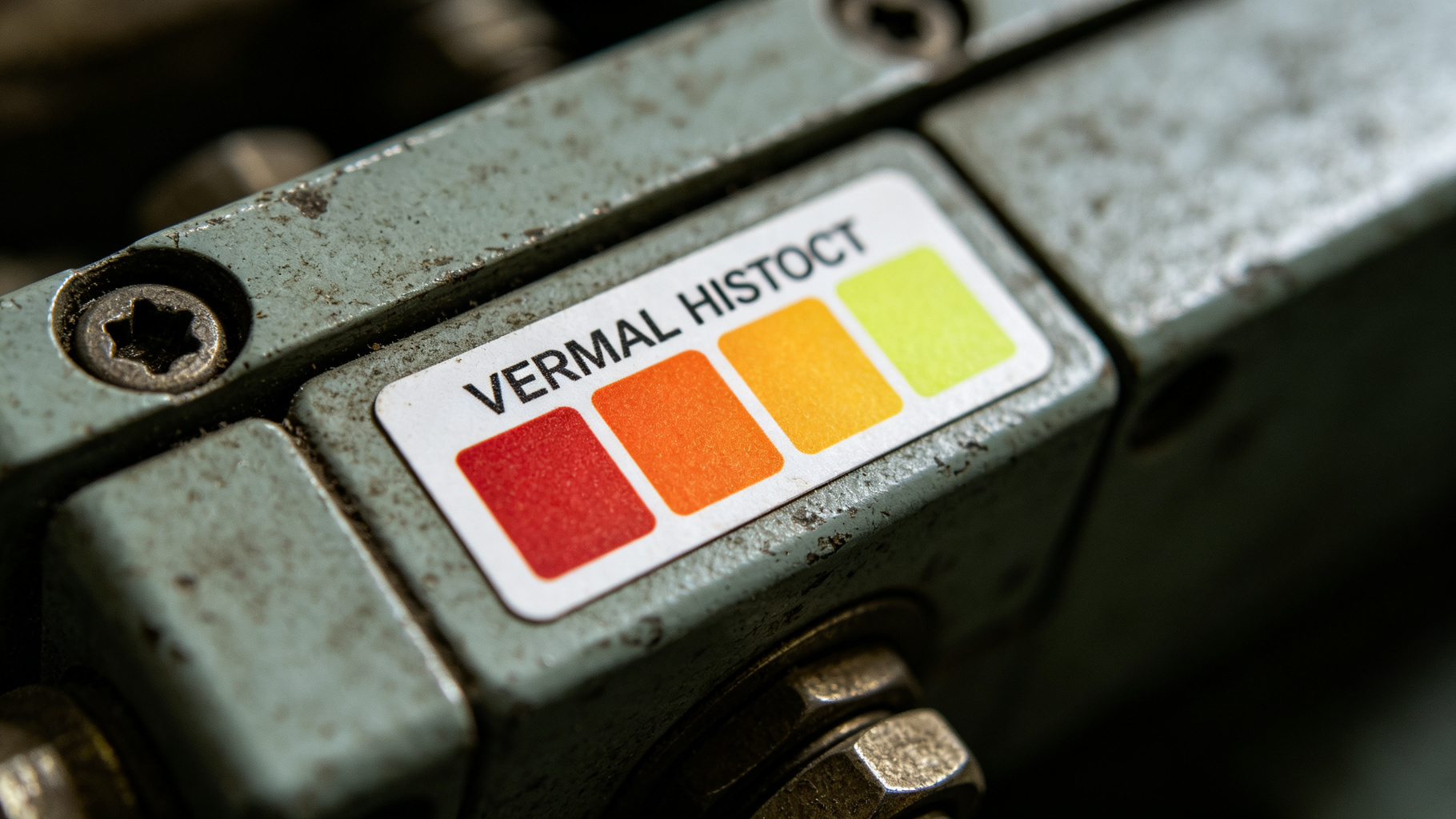
FIREQUELL QuellArmor™ products incorporate a visual thermal history indicator based on irreversible thermochromic pigment technology. Unlike reversible temperature labels that change color with current temperature and revert when cooled, these materials undergo a permanent, irreversible color change when exposed to temperatures exceeding their threshold.
2.1 How It Works
The indicator consists of a specialized pigment system dispersed in a polymer binder applied to a temperature-resistant substrate. The pigment molecules are engineered to undergo a structural rearrangement at a specific temperature threshold. This rearrangement:
- Is triggered at a precise temperature (60-70°C for the standard indicator)
- Is irreversible — the color change is permanent even after cooling
- Requires no power, electronics, or external activation
- Is visible to the naked eye under normal lighting
- Does not degrade over the 5-year service life under normal conditions
2.2 Color Transition
The standard FIREQUELL thermal indicator transitions irreversibly from a light, neutral color (typically white or pale yellow) to black when the threshold temperature (60-70°C) is exceeded. The change is binary — there is no intermediate state — making interpretation unambiguous during visual inspection.
3. Technical Specifications
| Parameter | Value |
|---|---|
| Activation threshold | 60-70°C (standard); other thresholds available |
| Response time | < 10 seconds at threshold temperature |
| Reversibility | None — permanent color change |
| Service life | 5 years minimum under rated conditions |
| Storage temperature | -20°C to +50°C (unactivated state) |
| Visual contrast | ΔE > 30 (clearly distinguishable) |
| Power required | None |
4. Practical Applications in Maintenance
4.1 Routine Inspection Protocol
During periodic thermographic surveys or visual inspections, maintenance personnel can quickly scan for activated indicators. A color-changed indicator signals that the location has experienced temperatures above normal operating range at some point since installation or last replacement. This directs investigative attention to specific connection points or components without requiring continuous monitoring infrastructure.
4.2 Post-Incident Forensics
After an electrical event — even one that did not result in fire — the thermal indicator provides evidence of temperature history. This can be valuable for:
- Root cause analysis after equipment failure
- Insurance claims documentation
- Identifying recurring problem locations in a facility
- Verifying that equipment operated within specified temperature ranges
4.3 New Commissioning Verification
After installation or modification of electrical equipment, thermal indicators provide a simple method to verify that no unexpected hotspots develop during the initial operating period. An activated indicator in the weeks following commissioning signals an installation issue that should be investigated.
5. Comparison with Alternative Monitoring Methods
| Method | Cost | Power | History | Coverage |
|---|---|---|---|---|
| Thermochromic indicator | Very low | None | Peak (irreversible) | Point |
| IR thermography | High (camera + labor) | N/A | Snapshot only | Survey |
| Thermocouple + logger | Medium | Required | Continuous | Point |
| Fiber optic DTS | Very high | Required | Continuous | Distributed |
| Temp-sensitive labels | Low | None | Peak (multiple dots) | Point |
6. Integration with Suppression
In QuellArmor™ products, the thermal history indicator serves a dual purpose alongside the suppression agent:
- Pre-fire warning: The indicator activates at 60-70°C, well below the suppression patch activation temperature (80-180°C depending on grade). An activated indicator with an intact suppression patch means the enclosure experienced overheating but the patch has not discharged — this is an early warning that requires investigation.
- Post-discharge confirmation: If the suppression patch has discharged, the activated indicator confirms that thermal conditions exceeded both the warning threshold and the suppression threshold, validating that the activation was genuine and not caused by mechanical damage.
7. Limitations
- The indicator records that a threshold was exceeded, not the duration or exact peak temperature
- Once activated, it cannot be reset — the indicator patch must be replaced
- Surface temperature measured may differ from internal component temperature due to thermal resistance
- UV exposure over very long periods may cause slight fading of the unactivated state (minimal in indoor electrical enclosures)
- Not a substitute for direct temperature measurement when precise values are needed
8. Conclusion
Irreversible thermal indicators fill a unique niche in electrical maintenance: they provide permanent, tamper-evident evidence of overheating events at negligible cost and with zero infrastructure requirements. When integrated with passive suppression patches, they create a two-stage safety system: visual warning at moderate overheat temperatures, followed by automatic suppression at fire temperatures. For facility managers seeking to improve preventive maintenance programs without investing in complex monitoring systems, thermal history indicators offer a simple, reliable, and cost-effective complement to periodic inspection routines.
Note: The thermal indicator is a supplementary safety and maintenance feature, not a measurement instrument. For applications requiring precise temperature monitoring or compliance with specific standards, use calibrated measurement equipment.
Frequently Asked Questions
Q: Is the indicator reusable?
A: No, but the patch is five-year. The indicator label is intended as a permanent record of thermal exposure.
Q: What colour does it turn at activation?
A: The label turns from white to jet-black above 165 degrees Celsius — visible from 3 metres during inspection.
Q: Does it need batteries?
A: No. The colour change is purely thermochemical — heat alone drives the reaction.